Home / Journeys & consumption / Traffic versus open-road fuel cost calculator

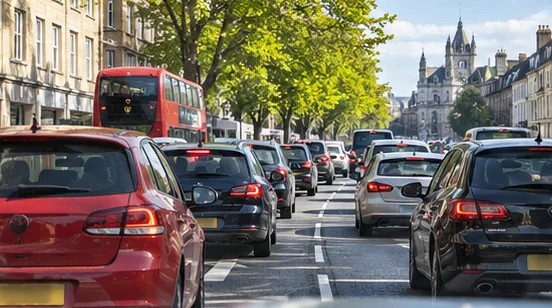
Cars and bus queuing in UK city traffic
Illustrative image. Use your own prices and vehicle figures in the calculator.
Journeys & consumption / calculator

Traffic versus open-road fuel cost calculator

Calculate the extra fuel used on a journey that mixes slower urban driving with efficient open-road miles.

01 / Interactive estimate

Work out your fuel cost

Values are editable examples, not a guaranteed live price. Change any input to update your result.

Your estimate—

Enter your figures to see the calculation.

Runs in your browser. No personal details or journey information are sent to our site.

How to interpret the result

Reading your result: traffic versus open-road fuel cost

The calculation adds the separate fuel quantities from the congested and free-flow sections; it does not add an extra fuel penalty beyond the MPGs entered.

A worked example

If 40% of 120 miles is driven at 27 MPG and the rest at 52 MPG, we calculate gallons for each section before converting to litres.

Important distinction

Why does real-world fuel consumption vary?

Driving conditions, speed, terrain, temperature, journey length, vehicle load and tyre condition can alter actual MPG. Use measured economy where possible.

Actual traffic conditions, idling and start-stop technology affect the outcome.

Before you rely on the estimate

Questions to ask about traffic versus open-road fuel cost calculator

How can I use this traffic versus open-road fuel cost tool?

The editable example is not a live local price quotation. A few tools use clearly labelled official published data; otherwise enter the rate shown on your own bill or forecourt.

What should I enter for total journey miles?

Replace the illustrative default with a measured or quoted value for your own vehicle or journey. If you are unsure, start with a realistic estimate and compare several plausible values.

What could change the final answer?

See Official UK pump-price series. This page states its assumptions separately from government rules.

Last reviewed: 5 November 2026 · Reference source · Independent calculations, not regulated tax advice.